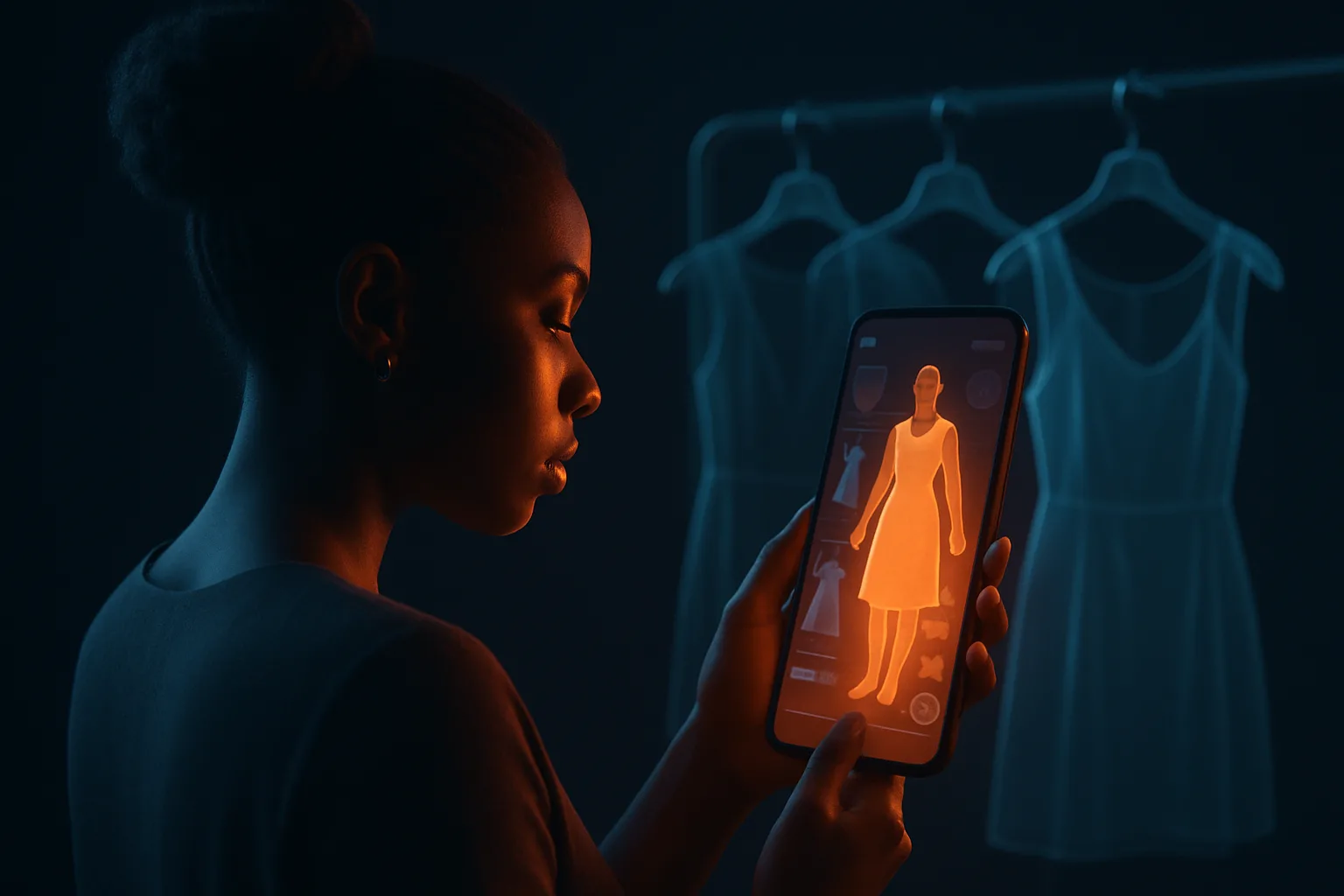
Luciana Womenswear has announced what it describes as Nigeria’s first artificial intelligence-powered virtual try-on for online fashion retail. The announcement appeared as Brand Press content on Techpoint Africa, created independently of Techpoint Africa’s editorial team, so it should be read as a company announcement rather than independent product testing.
For fashion ecommerce, the promise is obvious. A customer wants to know how an item may look before paying. The retailer wants fewer abandoned carts, fewer disappointed buyers, and less friction between browsing and checkout. A virtual try-on feature sits directly inside that tension. It tries to reduce uncertainty at the point where desire becomes a transaction.
But the value of this kind of AI is not in the AI label. It is in the reduction of doubt. If the feature helps a buyer choose between two dresses faster, understand fit better, or feel more confident ordering from a phone, it has a job. If it is just a visual effect sitting on top of poor product photos, vague sizing, and slow customer support, it becomes decoration.
The part most retailers underestimate is the catalogue
Virtual try-on depends heavily on what sits beneath the customer interface. A polished front end cannot compensate for weak product information. If colours are inconsistent across photos, garment dimensions are incomplete, sizes are not mapped properly, and inventory is not updated quickly enough, the virtual experience will create new problems instead of solving old ones.
AI retail tools need clean inputs. At minimum, that means organised product images, accurate size guides, clear stock status, consistent naming, and a checkout flow that does not collapse after the customer has made a decision. The more personal the feature becomes, the more unforgiving the basics become.
If your team still reconciles website orders, WhatsApp enquiries, and in-store stock in a spreadsheet at the end of the day, virtual try-on may not be the first investment. A better first step may be catalogue cleanup, inventory integration, payment flow improvement, and analytics. These are less fashionable projects. They are also the projects that decide whether customer-facing AI can carry its weight.
The mobile phone is the real fitting room
For West African ecommerce, the most practical reading of Luciana’s announcement is not “AI has arrived in fashion.” It is that the mobile shopping experience is becoming more demanding. Customers are already discovering products on small screens, comparing prices across channels, asking questions in chat, and expecting quick confirmation before they lose interest.
A virtual try-on tool, if it works well, belongs inside that mobile-first behaviour. It should not require a customer to understand the technology. It should load quickly enough, explain itself plainly, and fit naturally into product browsing. If it asks too much from the user, it will become one more abandoned feature.
Privacy cannot be an afterthought
Any feature that touches images, body representation, personal preferences, or shopping behaviour deserves careful handling. The approved announcement does not provide technical detail on how Luciana’s system processes customer data, what data is retained, or whether third-party vendors are involved. Those are not minor implementation questions. They are board-level questions for any retailer adopting similar tools.
Customers may be willing to use AI try-on if the value is clear. They are less forgiving when they feel tricked, tracked, or exposed. A retailer should be able to explain, in plain language, what information is collected, why it is needed, how long it is kept, and who processes it. Legal compliance matters, but trust is the bigger commercial issue.
There is also the matter of representation. Fashion is personal. If the try-on output regularly misrepresents colour, fit, body shape, or garment appearance, the customer does not blame the model. The customer blames the brand. AI does not remove responsibility from the retailer; it moves more responsibility into the digital experience.
This is why pilots are useful. Not theatre pilots, where the feature is launched with a press release and no serious measurement. Real pilots. Pick a limited product category, test with known customer groups, watch support queries, track drop-offs, review complaints, and compare behaviour against normal product pages. Most rollouts stall at the training step, not the technology step. Staff must know how to explain the feature, respond when it fails, and avoid overpromising.